.
Hate Violence Prevention & Abolition
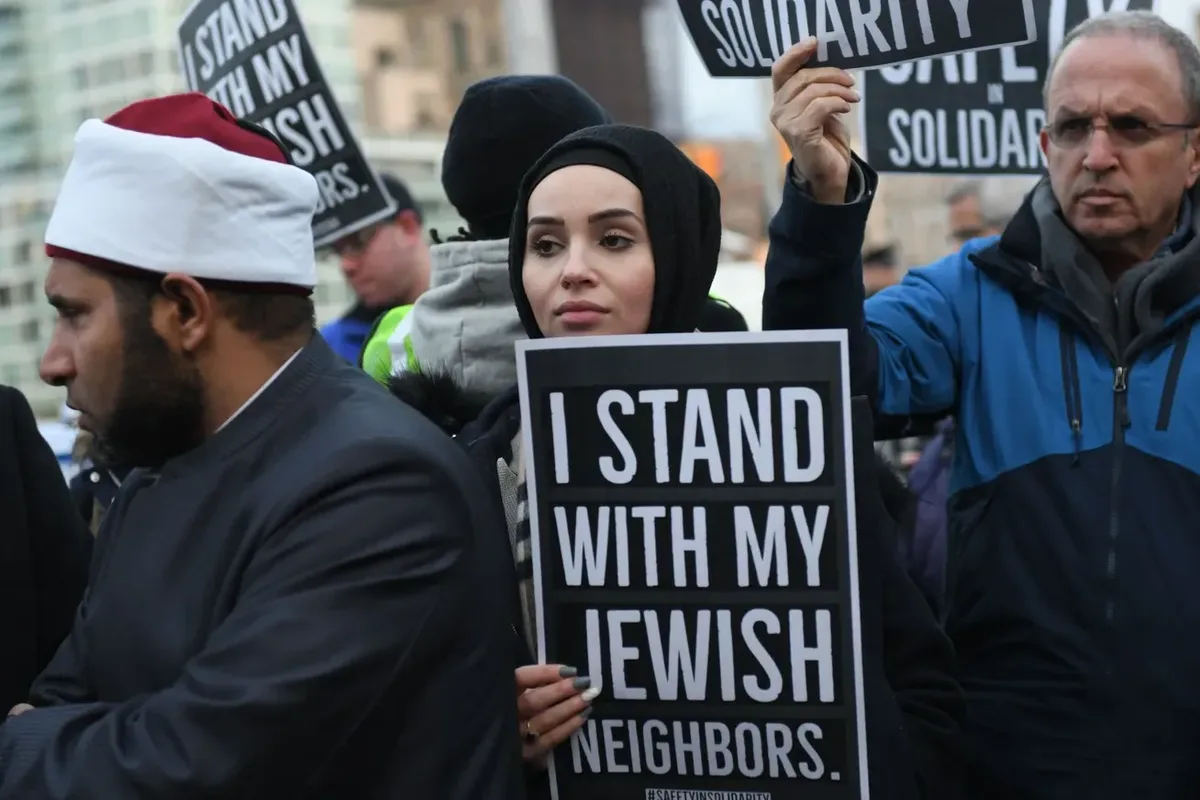
Combating antisemitism, joining with our neighbors to prevent hate violence and state violence against all our communities.
In 2026, JFREJ has organized to:
1. Secure over $26 million in funding for non-carceral hate violence prevention to provide the resources New Yorkers need to begin building the durable safety infrastructure that will make this city a happier, healthier, safer home for all of its residents. Click here to read the policy proposal. Click here to read our statement celebrating winning the $26 million in city funding!
2. Fight back against anti-democratic "buffer zone" legislation designed to silence speech and criminalize protest in the name of Jewish safety at both the city and state levels. Click here to read our joint statement opposing Intros 001/175 in the City Council and click here to read our statement celebrating the defeat of one of the buffer zone bills.
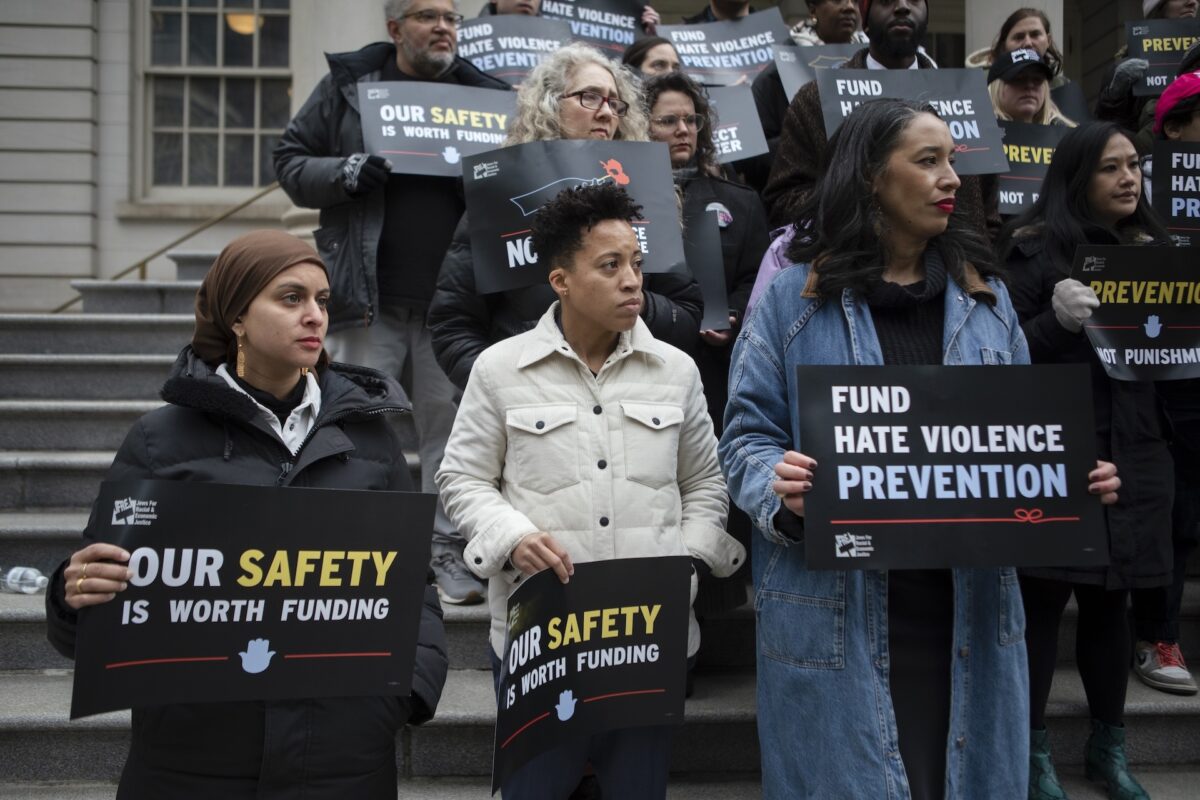
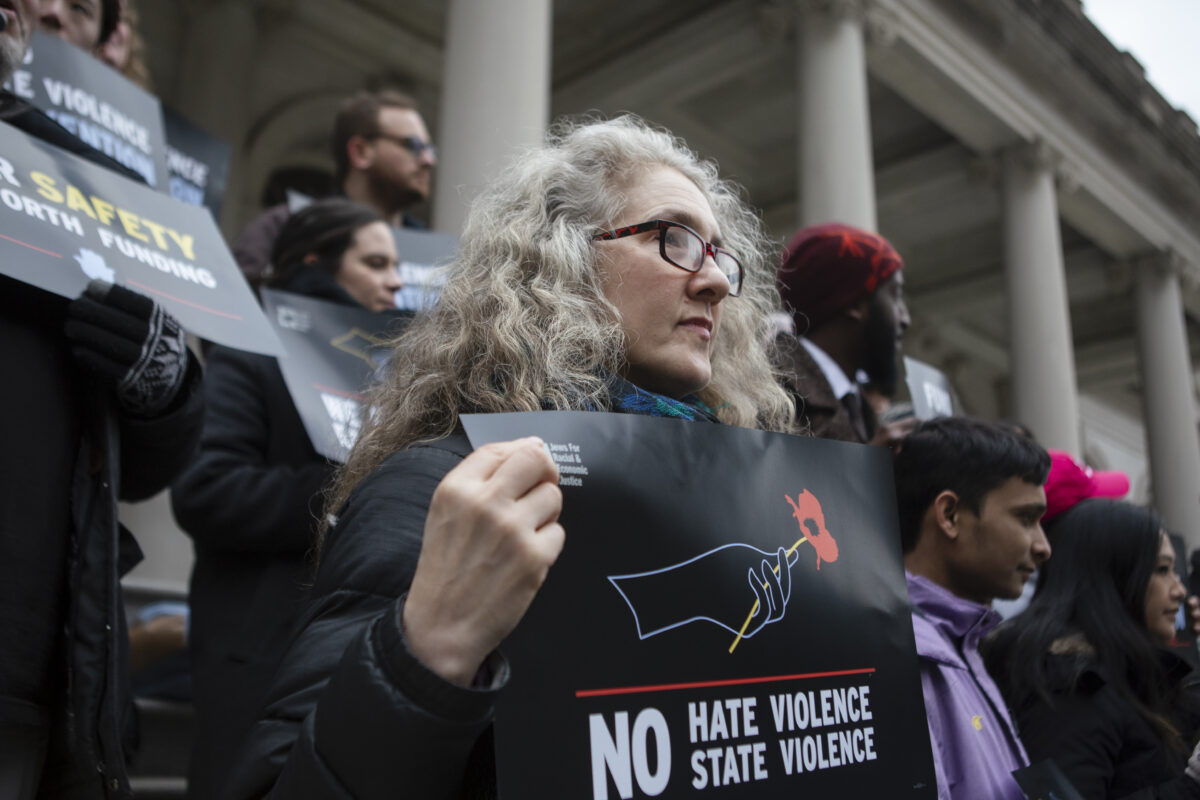
JFREJ has released NYC Against Hate Violence — a roadmap for New York City to invest over $26 million in evidence-based & non-carceral hate violence prevention policy.
Over the past decade, the NYPD Hate Crimes Task Force has been the city’s primary tool for fighting identity-based violence. On their watch, hate crimes have only increased. Even as crime in the city has fallen, hate crimes have only increased, up 152% in 2026 compared to the same period in 2025.
The first-of-its kind NYC Against Hate Violence report pulls from a robust, research-based source of supporting evidence (including research on social psychology and social dynamics in conflict zones around the world) to ground proposed hate violence prevention tactics in rigorous data.
The ensuing recommendations are for New York City to make a fundamental shift away from reactive policing and unreliable reporting systems, and toward evidence-based, community-driven relationship-building strategies. The recommendations outline a new prevention paradigm built around five pillars: reinvented reporting, proactive relationship development, capacity-building, community care and violence interruption, and anti‑bias education. The cost is estimated to be $26-30 million per year.
Learn more: nycagainsthate.org
✴
NYC Against Hate Coalition
In 2019, we formed the NYC Against Hate Coalition for communities to come together, protect each other, and fight identity-based violence.
NYC Against Hate is a diverse coalition of community-based organizations working across identities to make New York safer for our communities. Convened by Jews For Racial & Economic Justice (JFREJ) and the New York City Anti-Violence Project (AVP), NYC Against Hate includes the Audre Lorde Project, Arab American Association of New York, Brooklyn Movement Center, the Center for Anti-Violence Education, Desis Rising Up & Moving,, Global Action Project, Make The Road New York, and the Center for Anti-Violence Education. Together, we worked to lead:
- Bystander/upstander intervention trainings to empower community members to ally themselves with victims when an incident of hate or harassment is underway in public.
- Community-based, culturally competent reporting of hate violence incidents. Marginalized communities feel safest reporting incidents to community-based organizations, which can help them to make a safety plan and determine whether or not they would like to report to law enforcement or another city agency.
- Community care, including community-led transformative justice processes that focus on challenging and transforming the perspectives of people who do harm in our neighborhoods, as well as counseling and peer support services for survivors of violence.
- Rapid incident responses that may include community alerts, town hall meetings, neighborhood safety events, and will also create space for targeted school-based and neighborhood education across multiple identities.
Watch a video about our hate violence prevention canvasses: